
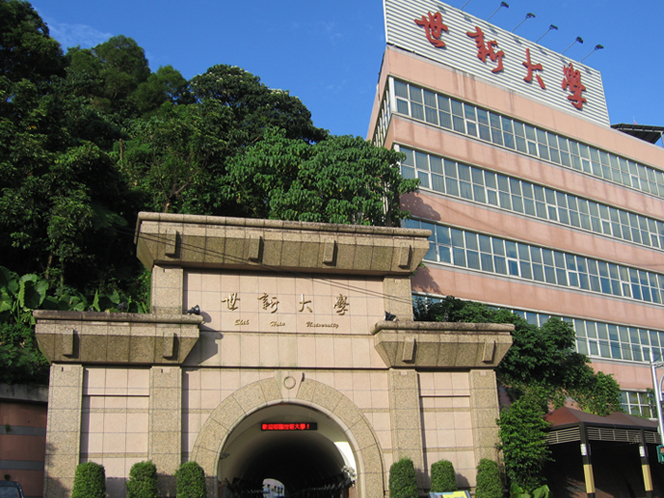
Since its founding, Shih Hsin University has upheld the university motto “Cultivating both virtue and intellect, integrating mind and hand,” and has been guided by the educational philosophy that “the university exists for students, and students come to learn.” With more than sixty years of dedication to communication education, the University was originally established in 1956 by its founder, Mr. Cheng She-wu, as the World Journalism Vocational School, with the mission of cultivating professionals in journalism and communication. After evolving through the junior college and college stages, it was officially restructured into Shih Hsin University in 1997, establishing its development direction as a higher education institution centered on communication.
The University currently comprises four colleges: Journalism and Communication, Management, Humanities and Social Sciences, and Law, offering a wide range of departments and degree programs, with a student population exceeding ten thousand. Among them, the College of Journalism and Communication is the most representative academic strength of Shih Hsin University and has long been one of the largest and most comprehensive communication colleges in Taiwan. It covers diverse fields including journalism, broadcasting, public relations, oral communication, information communication, and digital media design, forming a “full-spectrum communication” education system that spans content, technology, design, and influence. The College emphasizes a balance between theory and practice, and has established comprehensive professional facilities, internship centers, and industry-academia collaboration mechanisms, enabling students to gain hands-on experience during their studies and better align with industry needs.
In response to the rapid changes in digital technology and the media landscape, the College of Journalism and Communication continues to promote curriculum innovation and interdisciplinary integration. By combining artificial intelligence, digital content, social media influence, and an international perspective, it aims to cultivate the next generation of communication professionals who possess practical expertise, communicative influence, and a strong sense of social responsibility, thereby continuing to lead the development of communication education in Taiwan.